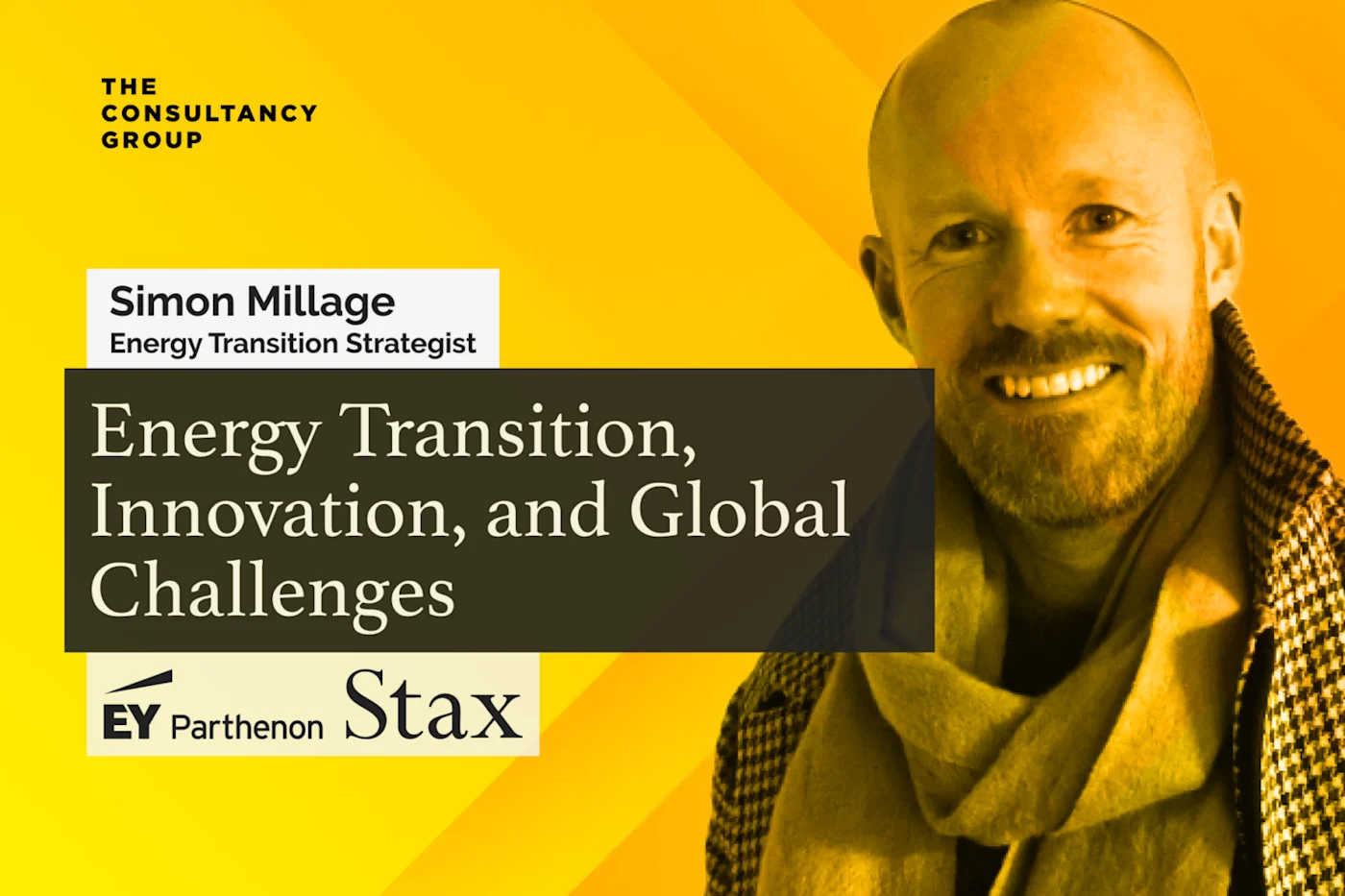
Simon’s insights offer a window into the intricate dynamics of the energy transition and the need for innovation, collaboration, and long-term vision.
A Global Perspective on Energy Transition
The scale of the energy transition is staggering.
“The numbers are difficult to comprehend,” Simon says.
“Energy transition is unlike anything humanity has faced before. The scale is incomprehensible. On a global level, the transition demands trillions of dollars in investment and affects millions of jobs.”
“In Europe alone, it’s estimated to require over €1.7 trillion in infrastructure and energy generation, a scale eleven times larger than the Marshall Plan (Economic Recovery Act of 1948) after World War II.”
Simon highlights the complexity of this transformation, from shifting global energy markets to the need for new industrial strategies.
“We’re talking about six million job losses and eleven million jobs created,” he adds.
“This isn’t just about decarbonising energy. It’s a complete reimagining of how economies work.”
Two countries dominate this transformation: China and the United States.
“China invests with a 50-year vision,” Simon notes. “They’re leading in electric vehicles, batteries, and lithium reserves.”
Meanwhile, the United States has committed over $2 trillion through landmark initiatives including:
The Inflation Reduction Act (IRA), focused on energy transition
The CHIPS Act, designed to accelerate advanced technology development
“Together, these policies are creating a magnet for global investment and innovation,” Simon says.
The UK’s Challenge: From Innovation to Industrialisation
While Simon commends the UK’s leadership in research and development, he is candid about its shortcomings.
“The UK is a hotbed for innovation, but we’ve fallen short on turning those ideas into industrialised solutions,” he explains.
“We excel at creating intellectual property but fail to establish the factories and supply chains needed to scale these innovations into global products.”
Simon believes this gap stems from the absence of a coherent industrial strategy.
“There’s no clear linkage between R&D investments and long-term economic returns. We’re seeing other nations outpace us because they align their industrial policies with strategic goals.”
The UK Policy Problem: Certainty Versus Instability
Simon also points to policy instability as a significant barrier to progress.
“Policy changes happen faster than technological advancements or financing in energy,” he explains. “That unpredictability drives away investment.”
“Capital flows to where there’s clarity, even if the returns aren’t extraordinary. If governments flip-flop on policies, it becomes impossible to attract the scale of investment required.”
He contrasts this with regions such as China and the Middle East, where long-term planning underpins energy investment.
“These regions see energy transition as an opportunity to dominate markets, and they act accordingly. They’re not just reacting. They’re leading.”
The Role of Technology in the Transition
Despite the challenges, Simon remains optimistic about the role technology will play in shaping a sustainable energy future.
“The UK and US are leaders in emerging technologies like small modular reactors (SMRs) and carbon capture, utilisation, and storage (CCUS),” he says.
“These innovations have the potential to decarbonise energy production while maintaining reliability.”
However, Simon is more cautious when discussing hydrogen.
“Hydrogen works well for hard-to-abate sectors like steel and concrete,” he explains.
“But the UK doesn’t have those industries at scale anymore. Investing heavily in hydrogen without considering its practical applications here feels misguided.”
A Global Race with Existential Stakes
Simon warns of the consequences if the UK and Europe fail to accelerate their energy transitions.
“This isn’t just about environmental impacts, though those are significant,” he says.
“It’s about energy security and economic stability. Relying on high-risk or disruptive foreign states for energy makes us vulnerable.”
“The war in Ukraine showed how disruptions in supply chains can ripple across economies.”
At the same time, he emphasises the economic opportunity at stake.
“Energy transition isn’t just a challenge. It’s a chance to lead. Countries that invest wisely now will dominate future markets.”
Final Thoughts
Simon’s perspective is both sobering and inspiring.
As a leader navigating the intersection of energy, policy, and innovation, his work reflects the urgency of addressing one of humanity’s greatest challenges.
“The energy transition isn’t a choice. It’s a necessity,” he concludes.
“The question isn’t whether we’ll transition, but how effectively we’ll do it. The countries and companies that get it right will shape the next century.”
In a world grappling with rising costs, geopolitical instability, and environmental pressures, Simon’s leadership offers a blueprint for how industries can balance innovation with pragmatism and turn challenges into transformative opportunities.